Faster video visualization of the project for the client
Reducing Routine Tasks
7x
Faster addition of background elements, props, and creation of a winter visualization scene
Process Optimization
5x
Faster generation based on a sketch and 3D modeling from a reference
Challenge
XXIIIVEK is a full-service architecture firm: from small-scale architectural projects to urban planning projects. Before implementing neural networks, the firm used traditional methods to create visualizations, videos, and 3D models, search for references, and add environmental details. After implementing Phygital+, the firm significantly simplified and accelerated its workflows.
Whenever we needed to create unique 3D elements, we had to spend time modeling them in various programs, and adding background elements to the renderings required manual work in Photoshop or hiring a visualizer.
Searching for references online is a never-ending cycle. It’s not always possible to find exactly what a client or company needs.
"Conceptual design is a never-ending stream of new input data. Using neural networks helps architects push the boundaries of creativity, reduce routine tasks, optimize processes, and improve communication."
— Daniil Shishkov, instructor, head of the Transistor architecture firm
Decision
One platform. Quick Creatives.
The XXIIIVEK team has started using Phygital+ to optimize its architectural processes—from searching for references to creating final visualizations and videos. All tools are available in a unified node-based interface that architects are very familiar with.
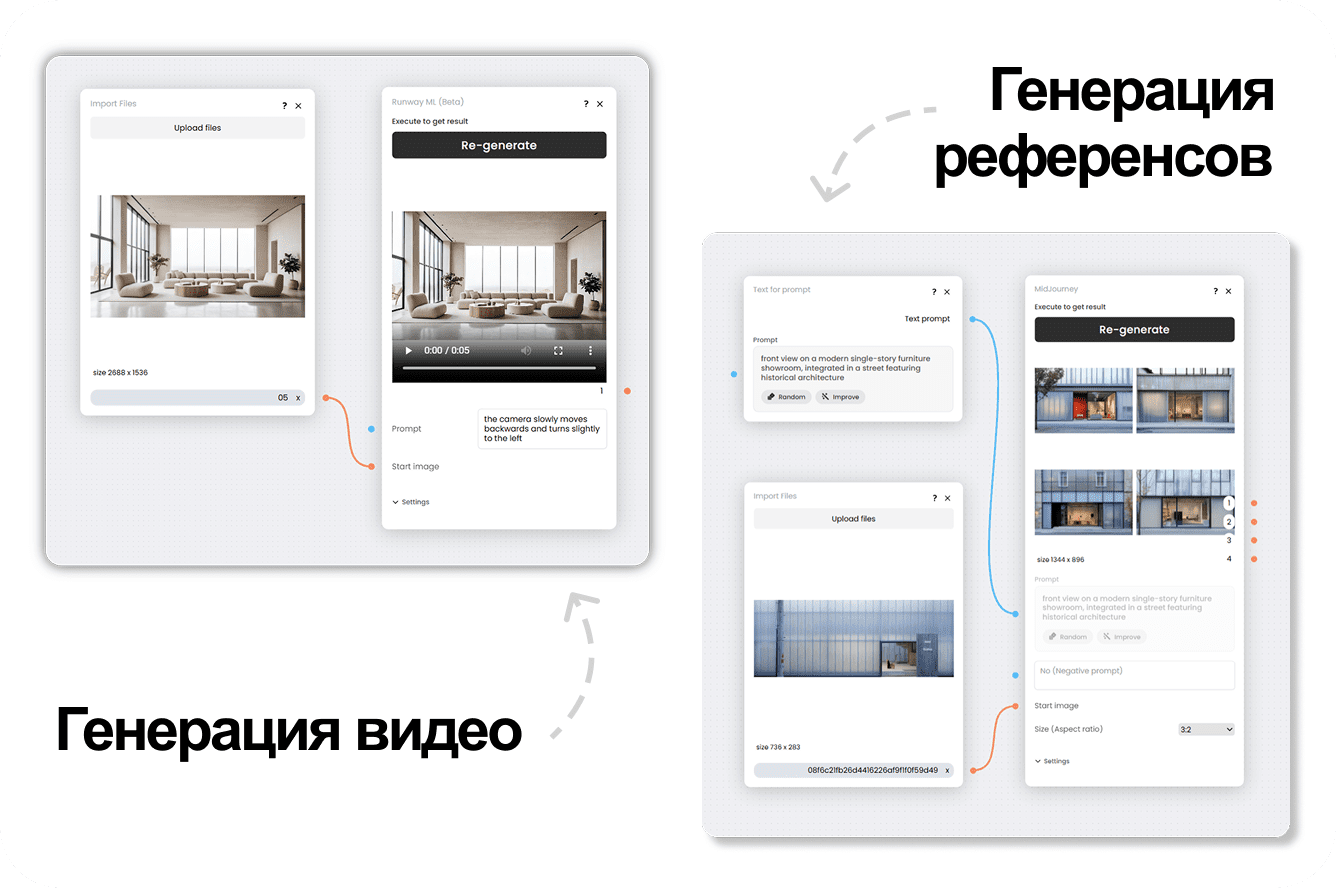
Midjourney / Flux — Generating Accurate References Instead of Searching for Scattered Images
Inpainting XL — Generating background elements (people, vegetation, clouds) directly on the render
Image to 3D — Generating 3D Objects from Photos
Runway ML — Animating Objects and Bringing Flat Designs to Life Using Renders
FLUX
Image to 3D
Runway ML
Inpainting XL
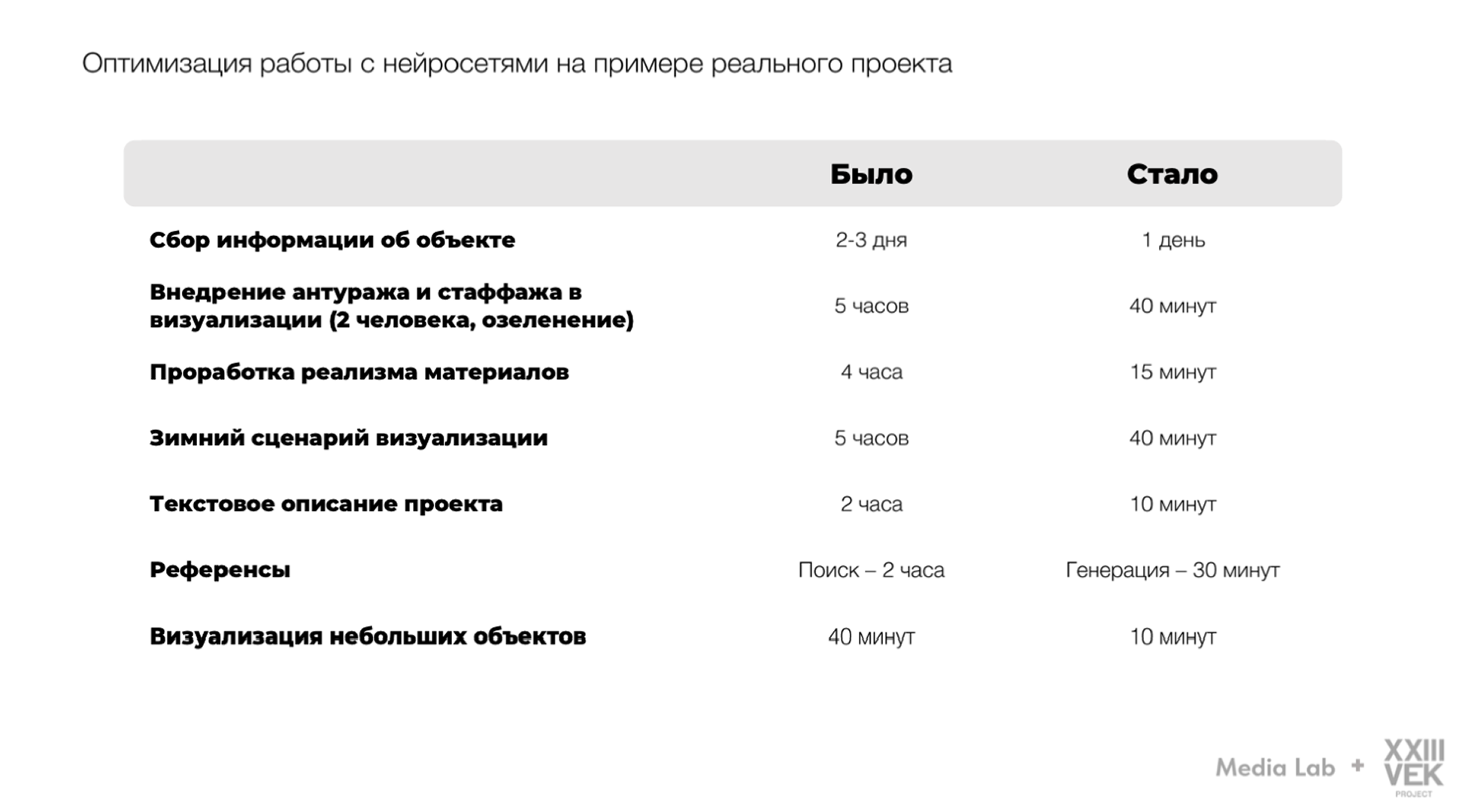
“In just a few months of working with Phygital+, we’ve reduced the time it takes to gather information about a property from 2–3 days to 1 day, the time to set up the environment from 5 hours to 40 minutes, and the time to create a video from 10–14 days to 20–30 minutes. This is a tremendous achievement in terms of optimizing timelines and budgets.”
— Valeria Sigulya, Chief Architect, XXIIIVEK
Result
After implementing Phygital+, the XXIIIVEK architectural firm began using neural networks in its day-to-day tasks and accelerated its workflow by at least 10 times, without compromising quality and while saving money.
1. Generating environments, modifying details, and creating architectural visualizations used to take up to 5 hours per iteration. With Phygital+, the team spends about 40 minutes on each task without having to rely on contractors.
2. Creating 3D objects using Phygital+ sped up the process by a factor of 5 to 7 compared to manual 3D modeling based on reference images.
3. Using a real-world project as an example, the XXIIIVEK team shared its findings on optimizing operations following the implementation of Phygital+
Learn more about how the XXIIIVEK Project uses neural networks.
"We incorporated neural networks into our work quite some time ago, which has significantly streamlined our processes. Neural networks aren't just some extra perk—'I'll use them sometimes if I feel like it, and other times I won't'—but rather a real part of the process today."
— Valeria Sigulya, Chief Architect, XXIIIVEK
Phygital+ helps architectural firms
Create visualizations faster, optimize workflows, and improve communication with clients—transforming architectural design into an efficient process powered by AI.
Чтобы обеспечить наилучший опыт, мы используем такие технологии, как cookies, для хранения и/или доступа к информации об устройстве. Согласие на использование этих технологий позволит нам обрабатывать такие данные, как поведение при просмотре или уникальные идентификаторы на этом сайте. Несогласие или отзыв согласия могут негативно повлиять на некоторые возможности и функции.
Функциональный
Always active
Техническое хранение или доступ строго необходимы для законной цели обеспечения возможности использования конкретной услуги, явно запрошенной абонентом или пользователем, или для единственной цели передачи сообщения по электронной коммуникационной сети.
Preferences
The technical storage or access is necessary for the legitimate purpose of storing preferences that are not requested by the subscriber or user.
Статистика
Техническое хранение или доступ, которые используются исключительно в статистических целях.The technical storage or access that is used exclusively for anonymous statistical purposes. Without a subpoena, voluntary compliance on the part of your Internet Service Provider, or additional records from a third party, information stored or retrieved for this purpose alone cannot usually be used to identify you.
Маркетинг
Техническое хранение или доступ необходимы для создания профилей пользователей для рассылки рекламы, а также для отслеживания пользователя на сайте или на нескольких сайтах в аналогичных маркетинговых целях.

 EN
EN